regaly magazynowe

Jakie regały wybrać do magazynu z żywnością?

Składowanie żywności to skomplikowany proces ze względu na termin przydatności i inne specyficzne cechy produktów spożywczych. Z tego powodu regały do magazynu z żywnością lub po prostu do sklepu, marketu powinny charakteryzować się konkretnymi właściwościami, szczególnie w zakresie utrzymywania właściwych temperatur. O czym jeszcze pamiętać przy wyborze regałów do magazynu z żywnością?

Wytyczne dla regałów w kontakcie z żywnością

Regały paletowe wykonane ze stali nierdzewnej to często spotykany widok w przedsiębiorstwach gastronomicznych. Materiał nie wchodzi w negatywne reakcje z żywnością, nie wpływa na smak ani na zapach. Od magazynu z żywnością oczekuje się spełnienia wysokich norm sanitarnych. Konkretne wymagania przekazuje Państwowa Inspekcja Sanitarna. Regały z funkcją chłodzenia i dopasowaniem temperatury najlepiej sprawdzają się przy przechowywaniu owoców, produktów mrożonych, mięsa. W przypadku magazynów chłodniczych przedsiębiorca musi ocenić, czy regały paletowe wytrzymają niskie temperatury. W zwykłych spiżarniach, bardziej amatorskich stosuje się często druciane koszyki albo skrzynie ustawione w zacienionych miejscach, chociaż przy wielu przetworach bardziej profesjonalne regały paletowe to też ciekawe rozwiązanie umożliwiające lepszą kontrolę zapasów.

Inne rodzaje regałów do magazynów z żywnością

Poza regałami wykonanymi ze stali nierdzewnej można zauważyć wzrost zainteresowania konstrukcjami polipropylenowymi czy chromowanymi zapewniającymi bardzo duży udźwig. Takie regały wprowadzają proste systemy organizacji pod system dystrybucji FIFO, czyli jeden z najlepszych w perspektywie wydawania produktów spożywczych z kończącą się datą przydatności. Najlepiej, żeby regały do magazynu z żywnością nie posiadały skomplikowanych kształtów, bo to utrudni czyszczenie, a tym samym spełnienie rygoru sanitarnego.

Regały paletowe w magazynie z żywnością to szansa na spełnienie wysokich standardów higienicznych, bez angażowania dużych środków finansowych.
przegląd regalow magazynowych

Inspection of warehouse racks – check the technical condition of racks before the end of the year

Safe warehouse management reduces losses resulting from damage to goods, and at the same time improves the comfort of employees’ duties. For this reason, it is worth considering an inspection of the storage racks before the end of the year. Why is rack inspection not only a legal obligation, but also an important service affecting the warehouse economy?

What can the inspection show?

The expert inspection of the racks shows the entrepreneur whether it does not violate the load capacity of the structure beyond the manufacturer’s indications and whether the warehouse has properly marked paths for forklifts and employees. If the rack load is regularly exceeded, the equipment may be damaged or some elements may collapse – damaged racks pose a real threat to employees.

How to organize reviews?

The warehouse owner should appoint an employee responsible for the ongoing control of the storage systems. Mandatory inspections of warehouse racks are carried out once every 12 months, although it is worth making a detailed inspection more often, for instance once every six months.

Summary of the advantages of expert rack inspections

elimination of downtime caused by damage to warehouse systems,

complementing the legal standards for warehouse management,

reduction of losses resulting from damage to goods,

greater staff safety.

regaly magazynowe

Picking orders in the warehouse – how to improve it?

Picking orders in the warehouse directly affects customer satisfaction. How to improve this process and eliminate mistakes?

Computerization and automation of the warehouse means fewer errors in all processes

The basic tool is the WMS system that collects and analyzes data in real time. Most of the WMS systems available on the market are connected with other applications, which enables the automation of order picking right after the notification is displayed in the panel. The software collects statistics that show the frequency of certain orders over time. This is an important tip for the warehouse owner, as some products can be stored close to each other and thus fulfill orders faster. The entire process is also helped by spacious storage racks with appropriately designated communication paths.

It is not about improving just one process, but all of them

Manual picking in warehouses is replaced by an automated approach, which is much cheaper in the long term, because it does not depend on the constantly rising costs of employment. Automation also excludes errors resulting from routine or periodic performance drops. The picking of orders in the warehouse is actually influenced by all processes, the distribution of storage, communication paths, and the tools used.

Smaller warehouses should put some emphasis on control

When executing smaller orders, the uniform numbering of goods and cooperation between the packing, storage and picking departments prove to be effective. Each employee can control the work of a co-worker and to a large extent reduce errors in the execution of the order for the client. All shipments should go through a control panel or similar.

At the end

Properly selected warehouse racks, an accurate WMS system and control during order fulfillment are the most important tools to increase the efficiency of business.

system wms

WMS, IoT i robotyzacja, czyli przyszłość magazynów

Idea przemysłu 4.0 zakłada połączenie internetu rzeczy, a także systemów do zarządzania w celu uzyskania maksymalnej efektywności procesów. Koncepcja dotyczy również prowadzenia gospodarki magazynowej. Przyszłość magazynów wiąże się z rozwojem WMS, IoT i robotyzacji właśnie. Dlaczego?

Znaczenie systemów skupiających dane

WMS to oprogramowanie umożliwiające kontrolowanie wszystkich funkcji magazynu. System WMS aktualizuje stany w czasie rzeczywistym, przekazuje raporty kluczowe dla produkcji, wykrywa i szybko informuje o pomyłkach w kompletacji zamówień. Informatyczna kontrola działań w dużym stopniu wyklucza błąd ludzki.

Inteligentne urządzenia do lepszej kontroli procesów

IoT to Internet Rzeczy. Jak koncepcję można wykorzystać w magazynie? Chociażby przez czujniki zbierające informacje o ruchu, otoczeniu. Na rynku pojawiają się bezprzewodowe urządzenia przekazujące dane o zapasach magazynowych czy systemy śledzenia kontenerów, przesyłek, pracowników, palet. Internet rzeczy służy w dużym stopniu do analizowania ogromnego zbioru danych i wyznaczania nowych ścieżek rozwoju. Przydaje się również w przewidywaniu konserwacji najdroższych urządzeń, bo czujniki informują o rzeczywistym zużyciu.

Robotyzacja z minimalizacją błędu ludzkiego

Robotyzacja w magazynie częściowo lub czasami całościowo zastępuje pracę ludzką. W Polsce już funkcjonują magazyny obsługiwane przez jednego operatora, całkowicie zautomatyzowane. Robotyzacja dotyczy głównie regałów, systemów kompletacji i przenoszenia towarów. Połączenie wszystkich systemów to nie tylko wzrost efektywności pracy, ale szansa na szybką zmianę profilu działalności. To szczególnie istotna zaleta w czasach kryzysowych, po nagłym zamknięciu rynku.

W perspektywie rozwój sztucznej inteligencji

Systemy magazynowe w niedługim czasie połączą się z algorytmami sztucznej inteligencji i z dużym prawdopodobieństwem zaczną wyznaczać zadania i perspektywy rozwoju dla całej działalności.

wyposazenie magazynow

The greatest difficulties of warehouses in Poland

The warehouse market is growing and developers have announced the construction of over 3 million sq m. new storage space for various assortment groups in the coming year. Even international corporations focus on warehouses that are the most neighboring with their recipients. In Poland, the demand for warehouses exceeds the supply, which is a certain optimization problem.

How to fight with limited space in the warehouse?

The greatest difficulty in running warehouses in Poland is the struggle with limited space. The solution to the problem is usually warehouse mezzanines and the expansion of the vertical space, without the need for general renovation of the entire building. Warehouse platforms with an elevator and stairs that can withstand heavy loads are an opportunity to increase the efficiency of warehouse management.

Investments in the warehouse market dominated by the largest corporations

Investments in the warehouse market have been dominated in the last year by large concerns and the logistics, trade and e-commerce sectors. Currently, warehouses are under pressure to partially break the supply chains, and renting storage space costs a lot in the largest agglomerations.

Increase in labor costs and changes in consumer habits

Big problems concern the increase in labor costs in warehouses. The tax wedge on the employment contract and the mandate contract is approaching the average, or even European leaders. The closing of the economy also partially changed the habits of consumers. The warehouses also handle complaints, returns and must use damaged or expired products in such a way as not to disturb the efficiency of the core business. Investments in computerization and process automation solve most of the difficulties.

At the end

The warehouse market is ruled by the largest corporations, and operating close to consumers becomes the main factor of success. More and more investments involve the use of storage platforms that enable vertical, not only horizontal, development. It is a convenient solution that more and more entities are choosing.

regaly magazynowe paletowe

Jak przygotować magazyn, by zapewnić komfort operatorom wózków widłowych?

Na komfort operatora wózka widłowego wpływa jakość samego wózka, ale również rozmieszczenie wyposażenia magazynu, które nie powoduje dodatkowych przestojów i nie ogranicza widoczności.  Zgodnie z dyrektywami unijnymi pracodawcy muszą kontrolować ryzyko pracy operatora wózka widłowego i stawiać na amortyzację, wydajność, regularne kontrole regałów.

Przystosowanie wózka widłowego oraz technika dostępu do asortymentu w magazynie

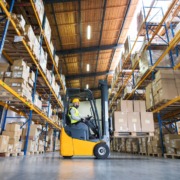
Jeden z podstawowych kroków do zwiększenia komfortu operatora to indywidualne dopasowanie kabiny, w tym zmniejszenie wibracji fotela, odpowiednie ustawienie podłogi, podłokietników, rozmieszczenie wspomagających akcesoriów. W lepszych wózkach stosuje się systemy wsparcia jazdy eliminujące ryzyko poślizgu, światła ostrzegawcze czy nawet kraty chroniące pracownika przed przypadkowym upadkiem ciężkiego towaru. Regały paletowe rozstawia się w taki sposób, aby wózek nie miał problemów z dojazdem i dostępem do asortymentu. W razie trudności można rozszerzyć pojazd o regulowane widły lub zainwestować w wózek wysokiego składowania, w zależności od formy prowadzenia gospodarki magazynowej.

Powszechne wypadki w pracy operatora wózka widłowego i założenia kontrolne

Najwięcej wypadków w pracy operatora za danymi z Centralnego Instytutu Ochrony Pracy występuje przez błędy w konstrukcji wózka widłowego, przez wady konstrukcyjne regałów i czynniki zewnętrzne, z reguły losowe. To mało efektywna kontrola i zaniedbania na gruncie zabezpieczeń powodują największe ryzyko, a przez to realnie zmniejszają komfort pracy. W magazynie nie można dopuścić również do unoszenia ludzi na widłach, do zahaczania wideł o wystające elementy regałów paletowych i kolizje z innymi urządzeniami magazynowymi. Od operatora oczekuje się zatem stałej koncentracji i sprawdzania otoczenia, w którym wykonuje obowiązki. To ostatecznie fundament komfortu.

Komfort operatora wózka widłowego to ważna zmienna dla wydajności prowadzenia gospodarki magazynowej, a jednocześnie mocno problematyczna strefa wymagająca stałej kontroli, nie tylko pracodawcy, ale samego operatora i współpracowników.

system WMS

WMS system – improved flexibility and measurable benefits for the warehouse

WMS system, i.e. improved flexibility and measurable benefits for the warehouse

WMS is a system designed for effective management of the receipt, storage and issuing of goods. Automated and software-controlled movement of products in the warehouse translates into higher profits.

What problems does the WMS system solve for entrepreneurs in warehouse management?

First of all, it significantly reduces the occurrence of human error when creating labels, receiving products, and settlements. The system shows the moment of receipt and movement of goods. The software detects space blockages and improves warehouse space consumption. Managers appreciate WMS for its reporting function in terms of key performance factors.

Choice of warehouse management software

The WMS system is not universal, but rather created for the needs of a specific company. Consultants related to the implementation of software for warehouse management first analyze the main needs and then propose personalized solutions, which allows you to gain a competitive advantage without incurring unnecessary costs. The entrepreneur decides to expand the software as the business grows.

Full integration with various business applications

The app updates in real time and integrates seamlessly with customer relationship management software, but more. Most WMS systems allow you to receive e-mails directly, make current settlements, and plan tasks. The WMS system is best suited to managing the flow of goods both in a production plant and in a warehouse.

Automation protects the image

Errors in completing orders mean not only financial losses, but even image losses when conducting sales on a more mass scale.

WMS makes it easier to accept and search for goods under the order, but it is also suitable for reporting and quick planning of tasks. Computerization of the warehouse frees up many resources of the company, including the time previously devoted to purely administrative matters.